2026-09-18 ·
How to Sort Construction Debris for a Marion Home Addition
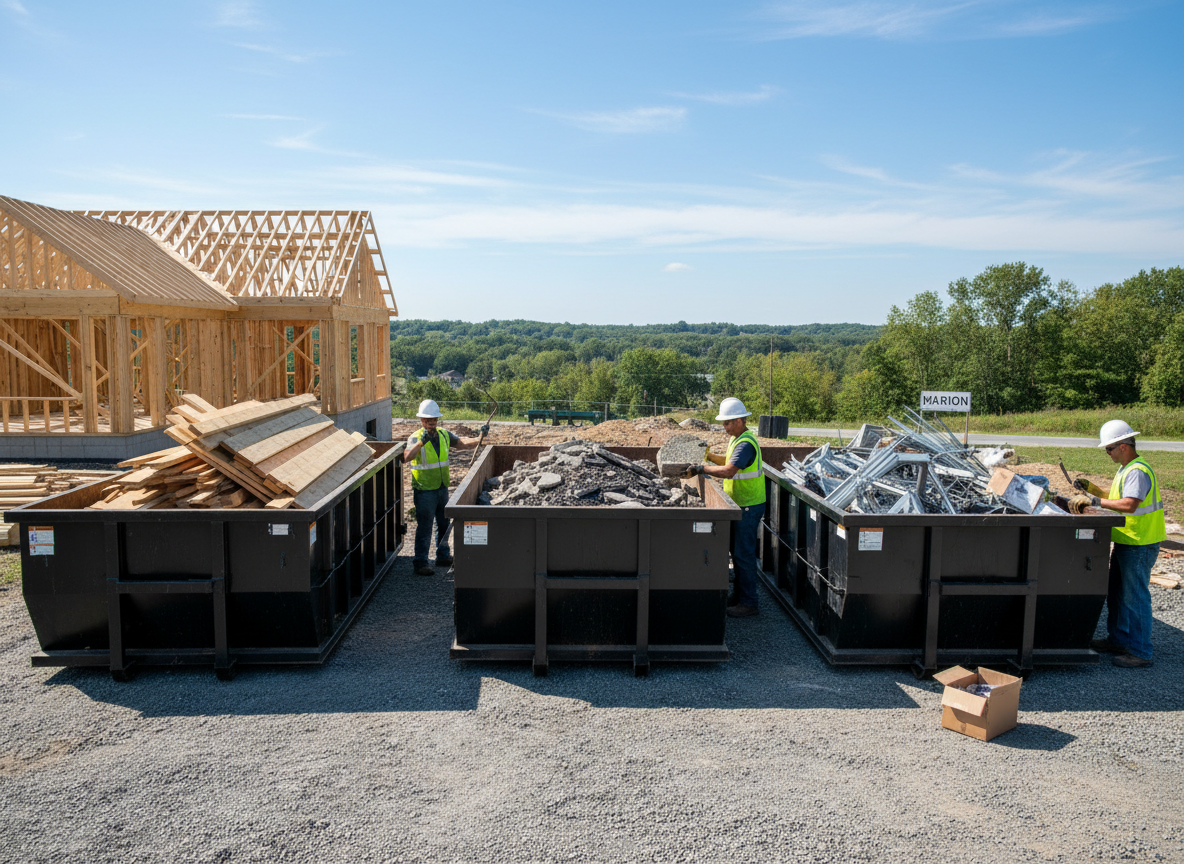
Start by separating construction debris from a Marion home addition into four main streams: dimensional lumber and plywood, metal scraps, concrete and masonry, and drywall or insulation. This approach keeps loads compliant with McDowell County rules and lets a single roll off container handle most of the volume without mixing prohibited items.
Sorting Wood and Lumber Debris
Wood makes up the largest share of debris when adding square footage to older homes in the Marion Historic District or near the McDowell County Courthouse. Pull nails and separate pressure-treated posts from clean framing lumber so the clean material can go to recycling centers in Morganton or Asheville. Stack pieces longer than four feet flat in the bottom of the dumpster to prevent shifting during mountain road transport. Keep painted or rotted wood in a separate pile for landfill disposal only, because mixing it raises fees at the transfer station. In cool winter months crews often work inside heated garages, generating more sawdust that should be bagged to avoid clogging the container floor.
Handling Metal, Concrete and Masonry
Metal scraps from rebar, flashing and old ductwork bring the highest scrap value in Spruce Pine yards, so keep them free of wood and drywall. Cut long pieces to four-foot lengths so they nest tightly and do not poke through the tarp. Concrete chunks and broken block from foundation work should be limited to one-quarter of the container volume; anything over that weight may require a second trip from the hauler. Rinse masonry dust off metal before loading so it does not bind during unloading at the recycling yard. Mild summer temperatures in McDowell County make outdoor sorting comfortable, but crews still wear gloves because sharp edges on rebar remain a hazard year-round.
Managing Drywall, Insulation and Mixed Waste
Drywall and fiberglass insulation must stay dry to avoid mold claims, so cover these piles with tarps when rain moves through the mountain valleys. Tape torn bags closed and place them on top of heavier wood so they do not tear during transport. Any material containing possible asbestos from pre-1980 homes near Lake Tahoma should be double-bagged and labeled for licensed abatement rather than placed in a standard construction dumpster rental. Label each pile clearly with spray paint so the driver knows exactly what is acceptable before the container leaves the driveway.
Preparing Loads for Local Pickup
Level every layer inside the container so the tarp sits flat and water does not pool during cool winter nights. Keep the driveway clear of loose nails and screws to protect tires when the truck arrives for 24/7 pickup. Homeowners in West Marion often place the container on the street side of the lot because narrow historic driveways cannot support the weight. Check the Understanding McDowell County Dumpster Placement Rules page for exact setbacks from the Marion Depot rail line. Once sorted, the remaining mixed load fits in one 20-yard container for most single-room additions, keeping the project on schedule without extra hauls.
Final Steps Before the Truck Arrives
Walk the site the evening before pickup and remove any items that do not belong, such as yard waste or household trash. Confirm the container weight limit with the driver so the load stays under county road restrictions on routes to Morganton. If the addition generates more concrete than expected, schedule a second container rather than overloading the first. These steps keep the job moving smoothly through the mountain climate and protect both the property and the crew.